
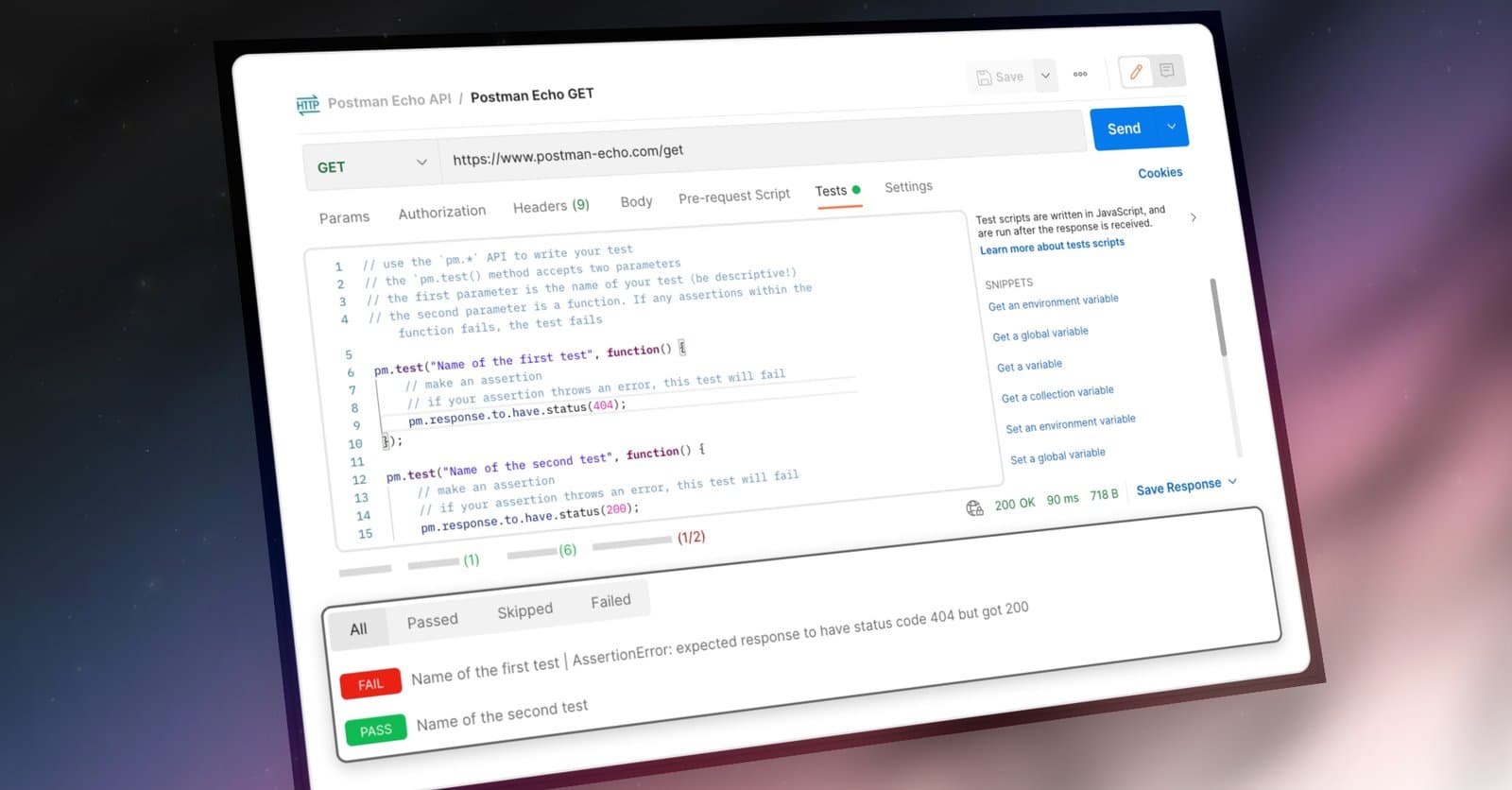
tldr: The best Postman alternative depends on what you actually do with Postman. If you send HTTP requests by hand, Bruno or Hoppscotch will feel lighter and get out of your way. If you are trying to confirm a real user flow works from front to back, an API client was never the right tool for that job. This is the full map.
Postman grew from a lean request tool into a heavy platform, and somewhere along the way it started asking for things developers did not want to give. A mandatory account. A cloud login to see your own collections. Features gated behind a team plan. None of that makes Postman bad. It makes a lot of people look for something smaller.
The catch is that "Postman alternative" covers two different needs that get lumped together. One group wants a leaner API client: fire requests, inspect responses, save a collection, done. The other group has outgrown request-by-request checking entirely and needs to know whether a full user journey works, which no API client does.
This guide splits those cleanly. First the API clients worth moving to, with honest trade-offs. Then the part of the testing stack that sits above the API layer, where the question is not "did this endpoint respond correctly" but "did the whole flow work for a real user."
Why teams are leaving Postman
The specific triggers matter, because they tell you what to look for in a replacement.
The account requirement is the big one. Postman moved core functionality behind a mandatory sign-in, and a tool that used to open and work now wants a login. For developers who just want to test a local API, that is friction with no payoff.
Weight is the second. Postman does a great deal now, and most people use a fraction of it. Collections, environments, mocks, monitors, workspaces. If you send twenty requests a week, you are launching a platform to do a text-editor-sized job.
The third is portability. Postman collections live in Postman's format and, increasingly, its cloud. Teams that want their API definitions in git, as plain files they can diff and review, find that hard to get.
Hold those three, account-free, lightweight, git-friendly, against the options below.
The best Postman alternatives
Bruno
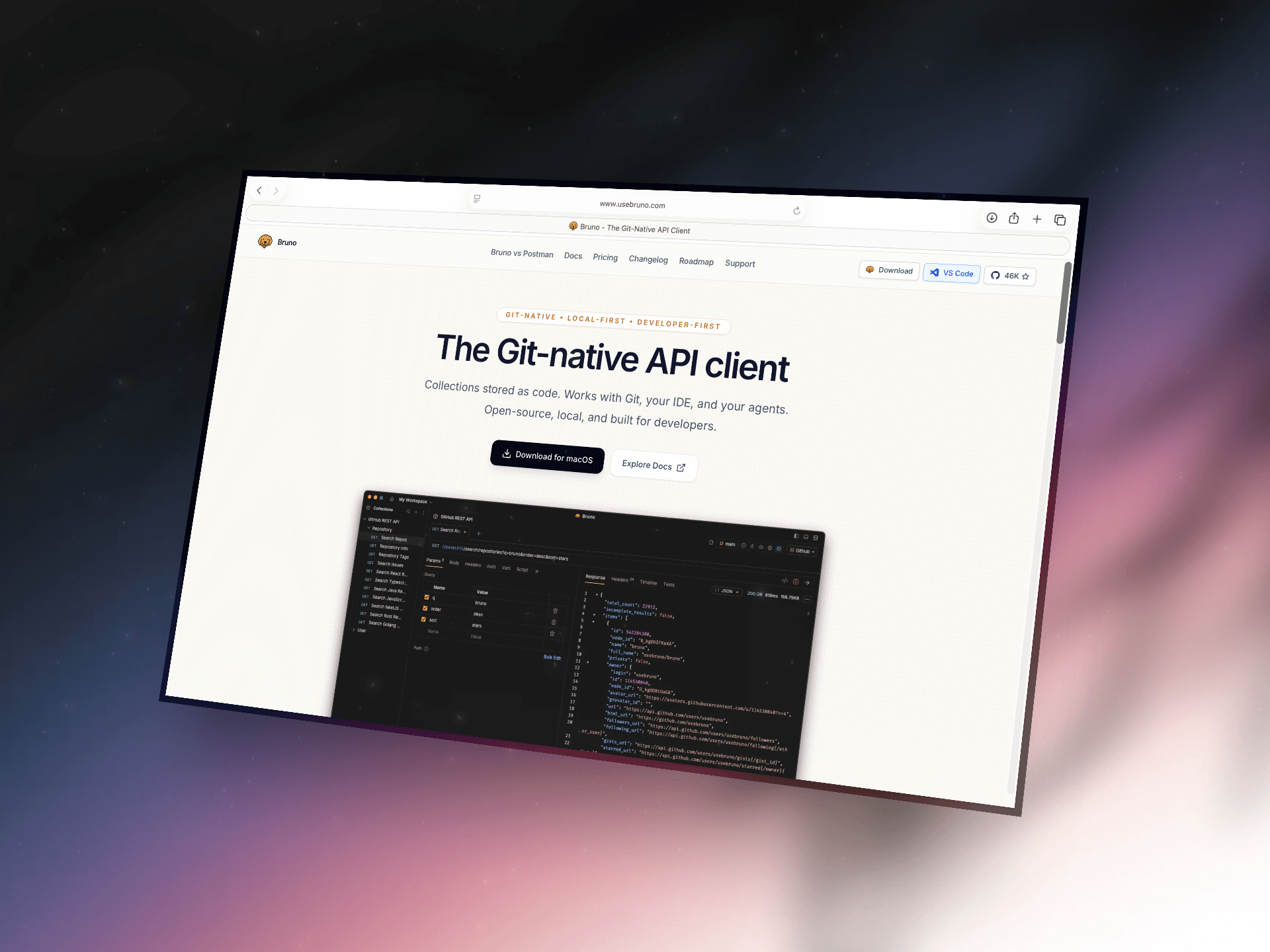
Bruno is the tool most ex-Postman users land on. It is open source, offline-first, and stores each request as a plain text file in your repo. No account, no cloud, no lock-in. You review API changes in a pull request like any other code.
The trade-off is that git-first is a workflow, not just a feature. If your team does not already live in git for everything, Bruno's model is a habit change. If it does, Bruno feels obvious.
Hoppscotch
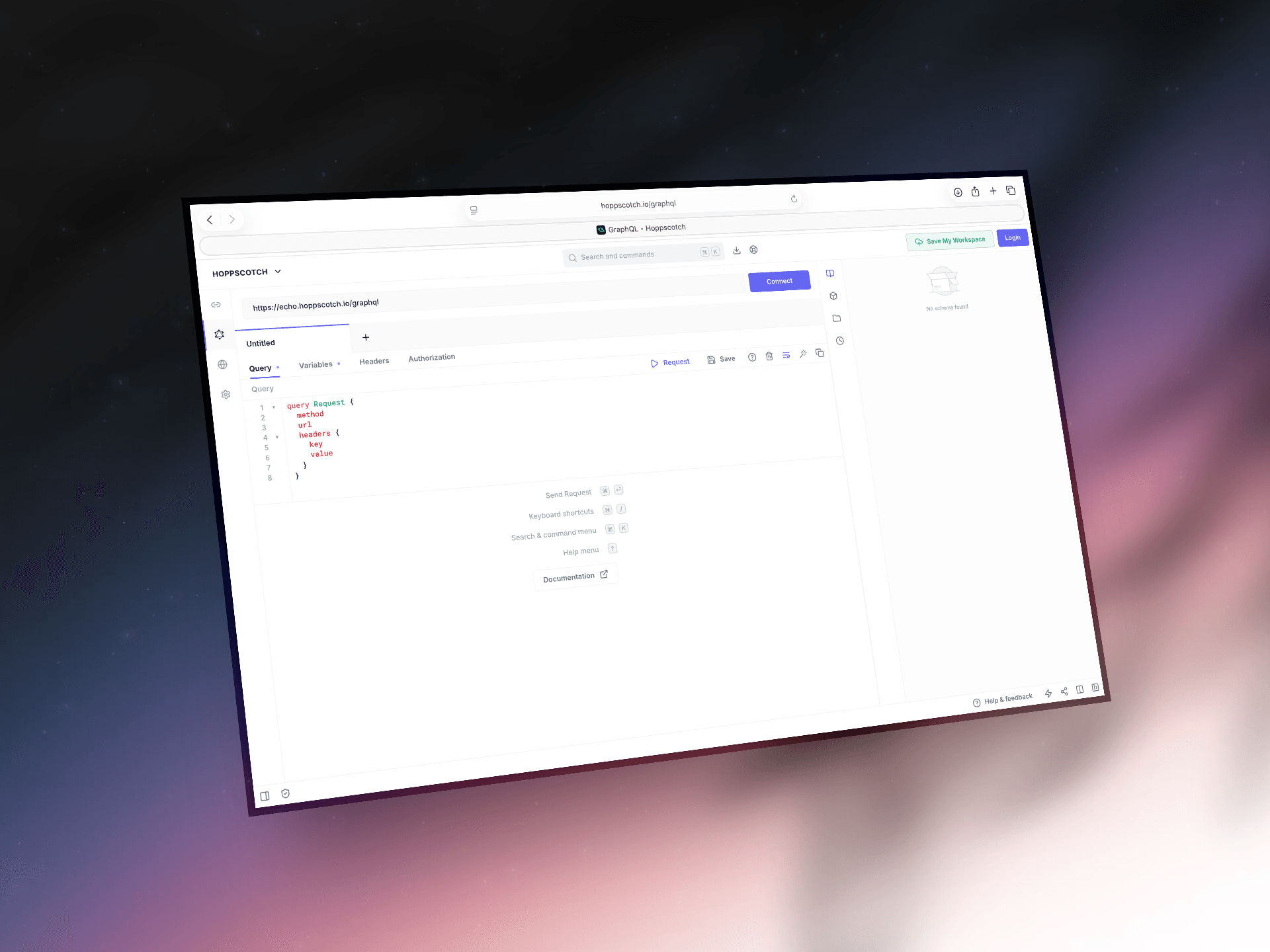
Hoppscotch is the lightest option. It runs in the browser, loads instantly, and self-hosts if you want it inside your network. For quick request-and-inspect work it is hard to beat on speed.
Being lightweight cuts both ways. Hoppscotch is not trying to be a full platform, so if you rely on deep collection management or heavy scripting, you will feel the ceiling sooner than with Postman.
Insomnia
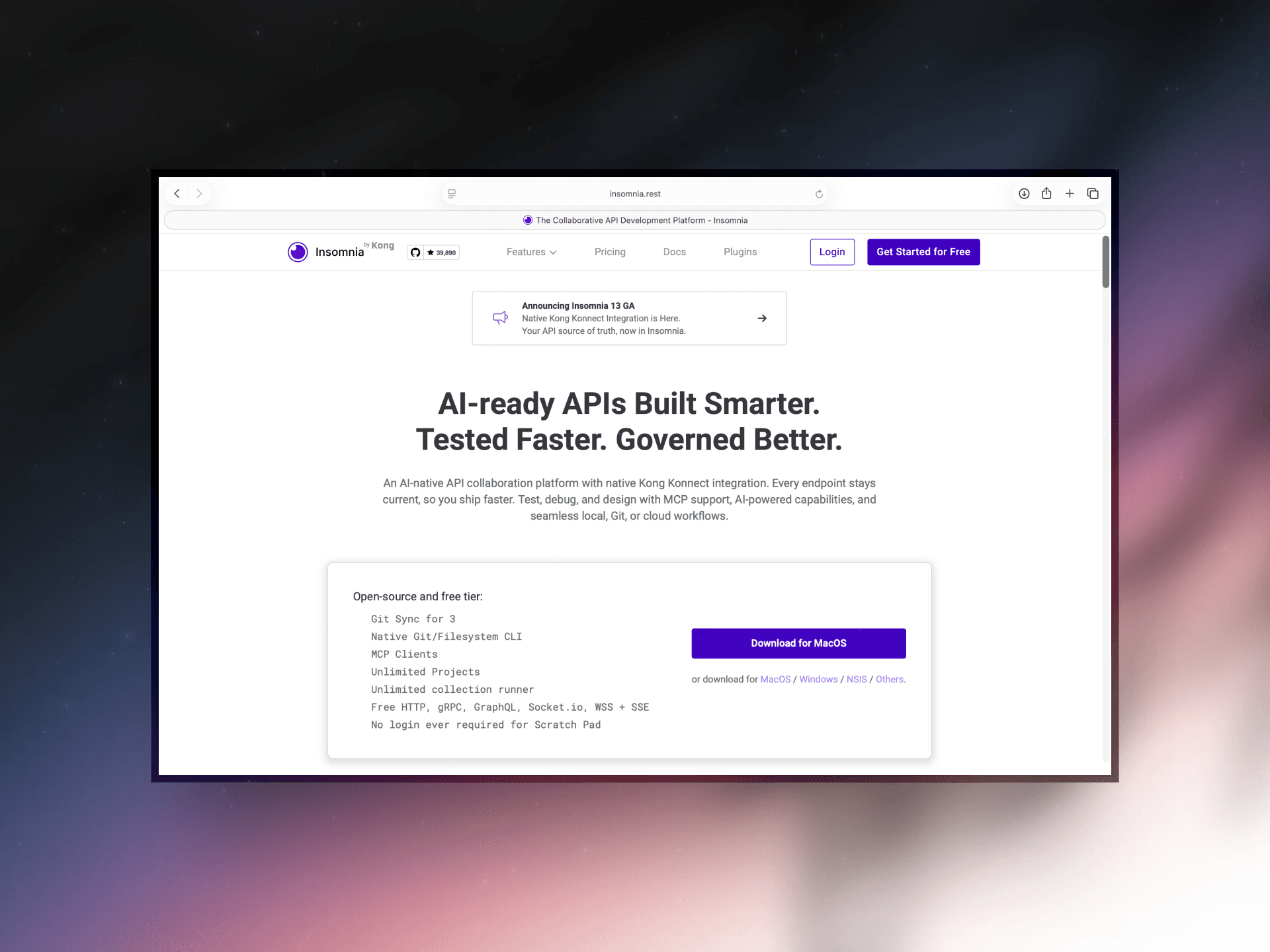
Insomnia is the closest feature-for-feature match to old Postman. It handles REST, GraphQL, and gRPC in a clean desktop app, and it has been around long enough to be stable and well documented.
Be aware it has walked its own path on accounts and cloud features over the years, so check the current requirements before you commit. If you want the Postman feature set without the Postman bulk, Insomnia is the safe pick.
Thunder Client
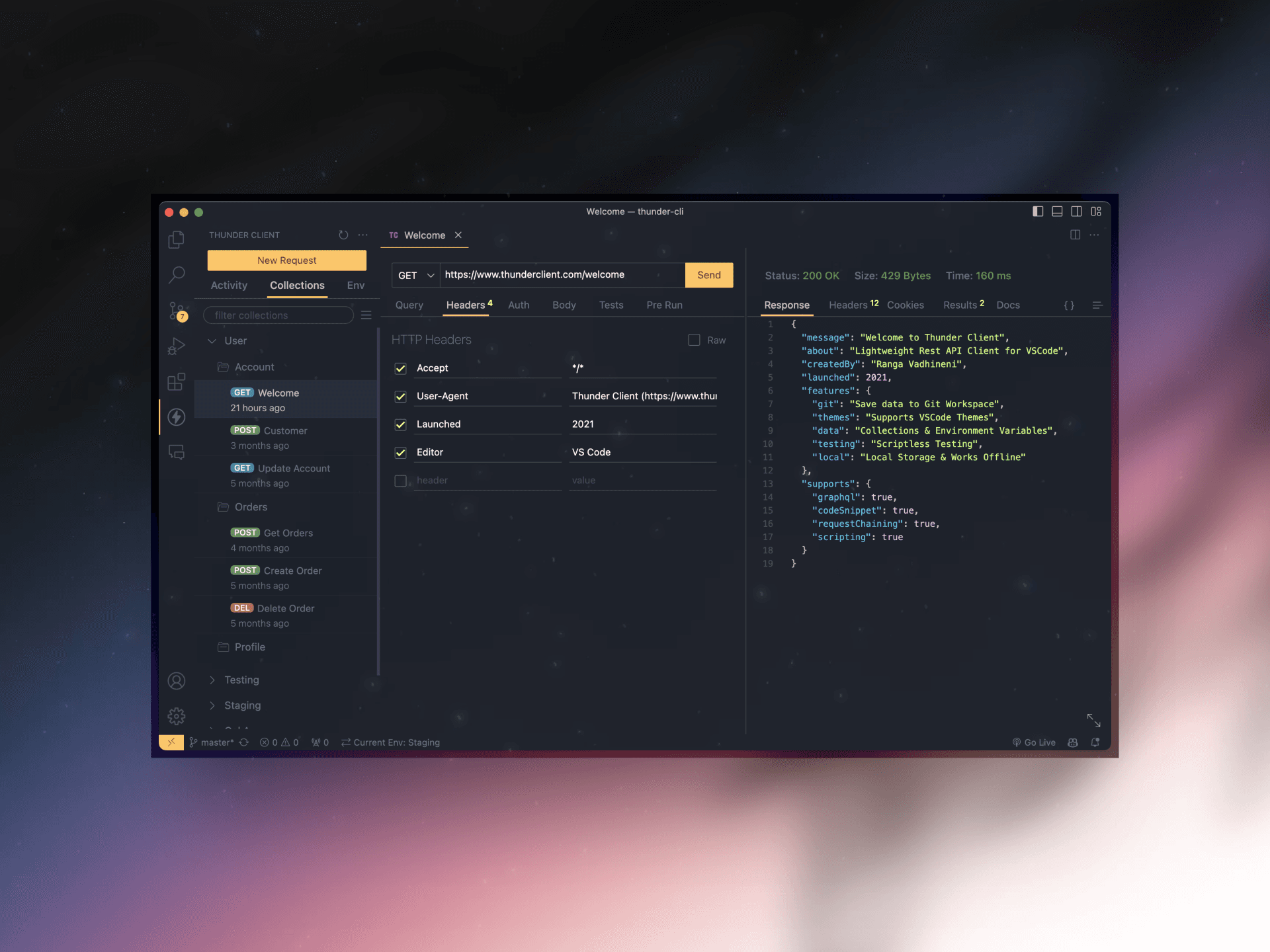
Thunder Client lives inside VS Code. If your editor is already open all day, testing an endpoint without leaving it is a real productivity win, and the learning curve is close to zero.
The limit is scope. It is built for individual developers working in the editor, not for large shared collections across a team, and some team features are paid. For a solo dev it is excellent. For coordinating API tests across ten engineers, less so.
Playwright API testing
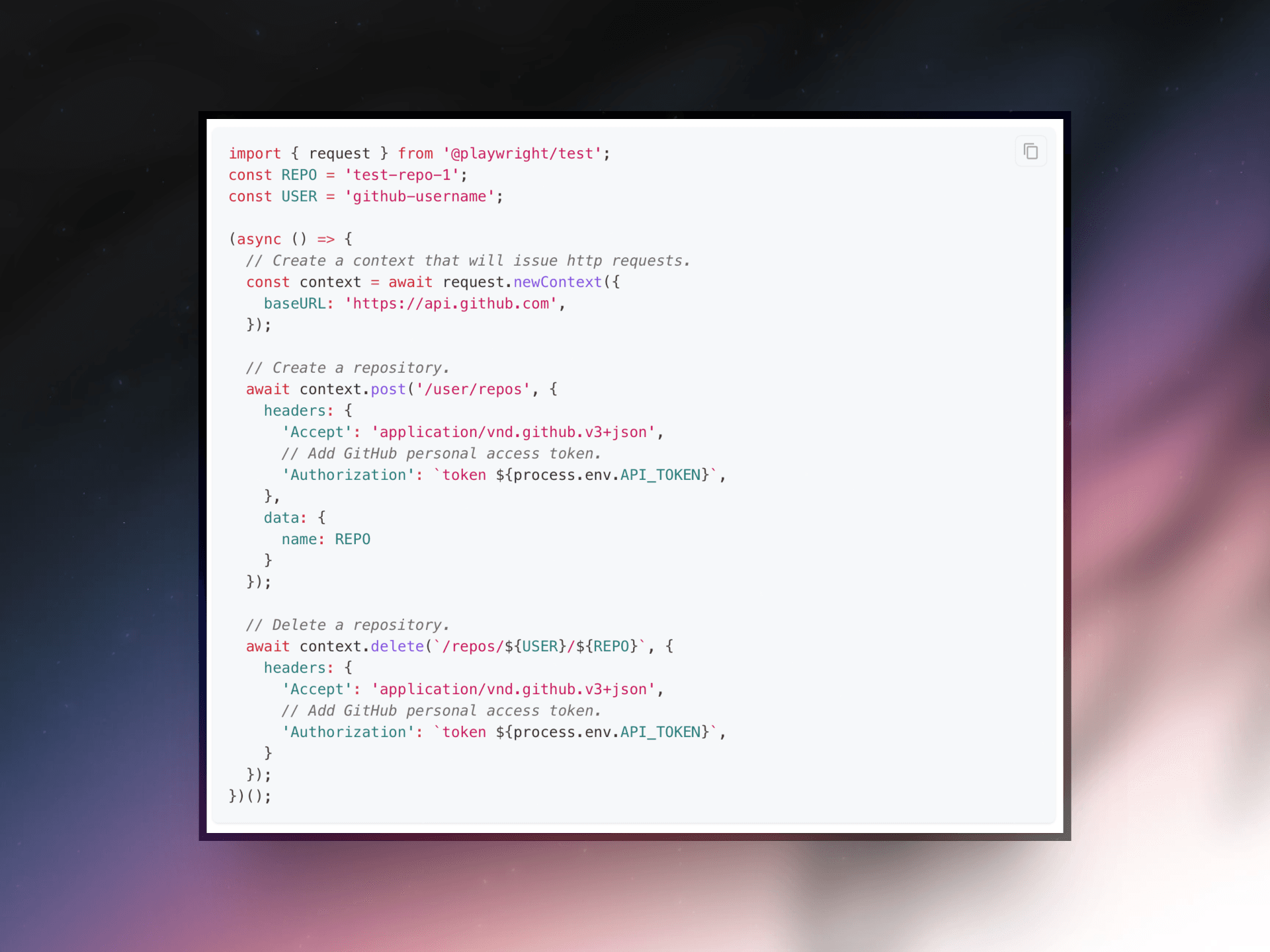
Playwright is a test framework, and its request context lets you write API tests as code alongside your browser tests. This is a different model from a GUI client: your API checks live in the same suite as your end-to-end tests, in version control, running in CI.
If you want API testing that behaves like the rest of your automated tests, rather than a separate manual tool, this is the direction to look. It asks more of you up front, in exchange for tests that run on every commit.
REST Assured
For JVM teams, REST Assured is the standard. It is a Java library for writing expressive, BDD-style API tests in code. It has no GUI and does not try to be a manual exploration tool. It is for teams who want their API contract verified automatically in a Java test suite.
Comparison table
| Tool | Open source | Works offline | No account required | Best for |
|---|---|---|---|---|
| Bruno | Yes | Yes | Yes | Git-native teams |
| Hoppscotch | Yes | Yes (self-host) | Yes | Fast, lightweight requests |
| Insomnia | Core | Yes | Check current terms | Closest Postman replacement |
| Thunder Client | No | Yes | Yes | Developers living in VS Code |
| Playwright | Yes | Yes | Yes | API tests as code, in CI |
| REST Assured | Yes | Yes | Yes | JVM teams, automated API tests |
Newer open-source Postman alternatives worth watching
The tools above are the safe, established picks. The open-source API space is also throwing off newer, stranger options, several of them barely a year old, some doing things Postman never tried. If you like being early, these are the ones to watch.
-
Yaak. A desktop API client from the original creator of Insomnia. It is local-only by default, stores data on your machine with encrypted secrets and zero telemetry, and is built to be git-friendly. It is the closest thing to "Insomnia before the cloud login," from the person who would know.
-
Posting. An API client that runs entirely in your terminal as a full text-based interface. No browser, no Electron window. For developers who live in the terminal and want to hit an endpoint without leaving it, it is a new take on the whole category.
-
ATAC. Another terminal API client, written in Rust, with a stated goal of staying free, account-less, and offline forever. It borrows the shape of Postman and Bruno and drops the GUI entirely. Tiny, fast, and opinionated about privacy.
-
Hurl. A CLI tool that runs HTTP requests written as plain text files, with assertions on the response built into the same file. Because a
.hurlfile is just text, it drops cleanly into version control and a CI pipeline. It sits between an API client and a test framework. -
Keploy. A different idea entirely. Instead of you writing requests, Keploy records real API traffic using eBPF at the network layer and turns it into test cases and mocks automatically. It is code-less and language-agnostic, and one of the more novel approaches to appear recently.
-
Schemathesis. Property-based testing for APIs. Point it at your OpenAPI or GraphQL schema and it generates test cases on its own, hunting for crashes, schema violations, and edge cases you would never write by hand. It is the pick for teams who want their spec to do the testing work.
One honest warning on all six. Newer means less battle-tested. Some are one-maintainer projects, and the terminal-native ones ask you to give up a GUI you may not want to give up. Every one of them is open source, though, so the cost of trying is an afternoon, not a contract.
AI-powered Postman alternatives
A newer category pitches itself as Postman with AI built in. Instead of you writing every request and assertion by hand, these tools generate tests from your API schema or from a plain-English prompt. The useful ones are less a client you click around in and more a test generator.
-
Qodex.ai. Positions directly as an AI-powered Postman alternative. Its AI agents read your API spec and generate test suites automatically, with fuzz and security testing on top, for teams who would rather not hand-write coverage.
-
Apidog. An all-in-one API platform for design, debugging, mocking, and docs that added an AI assistant. It generates mock data from your schema, auto-fills request parameters, and suggests assertions, which cuts the setup time for a new collection.
-
Postman Postbot. Postman itself is becoming an AI-powered Postman. Postbot writes test scripts, generates documentation, and suggests fixes for failing requests from inside Postman. If AI features are your only reason for leaving, Postman may already have what you want.
-
Karate Labs. AI-assisted test authoring and natural-language support built on the open-source Karate engine, with MCP integration for agent-driven workflows across both API and UI tests.
One thing to keep straight: every tool here brings AI to the API layer, generating requests and assertions against an endpoint. That is a different layer from the one a user actually touches, which is what the next section is about.
API testing vs end-to-end testing: where each stops
One distinction decides whether an API client is even the right category for you.
An API client verifies a request and a response. You send a call, you check the status code and the body. That is the correct tool for confirming an endpoint behaves. It is the wrong tool for confirming a user can actually complete a task, because a user does not send HTTP requests. They load a page, click, type, wait for something to render, and move on.
Plenty of bugs live only in that gap. The API returns a correct 200 and the button that calls it is disabled. Each endpoint in a checkout works and the flow still breaks because step three never enables step four. No API client catches those, because none of them drive the interface a user touches.
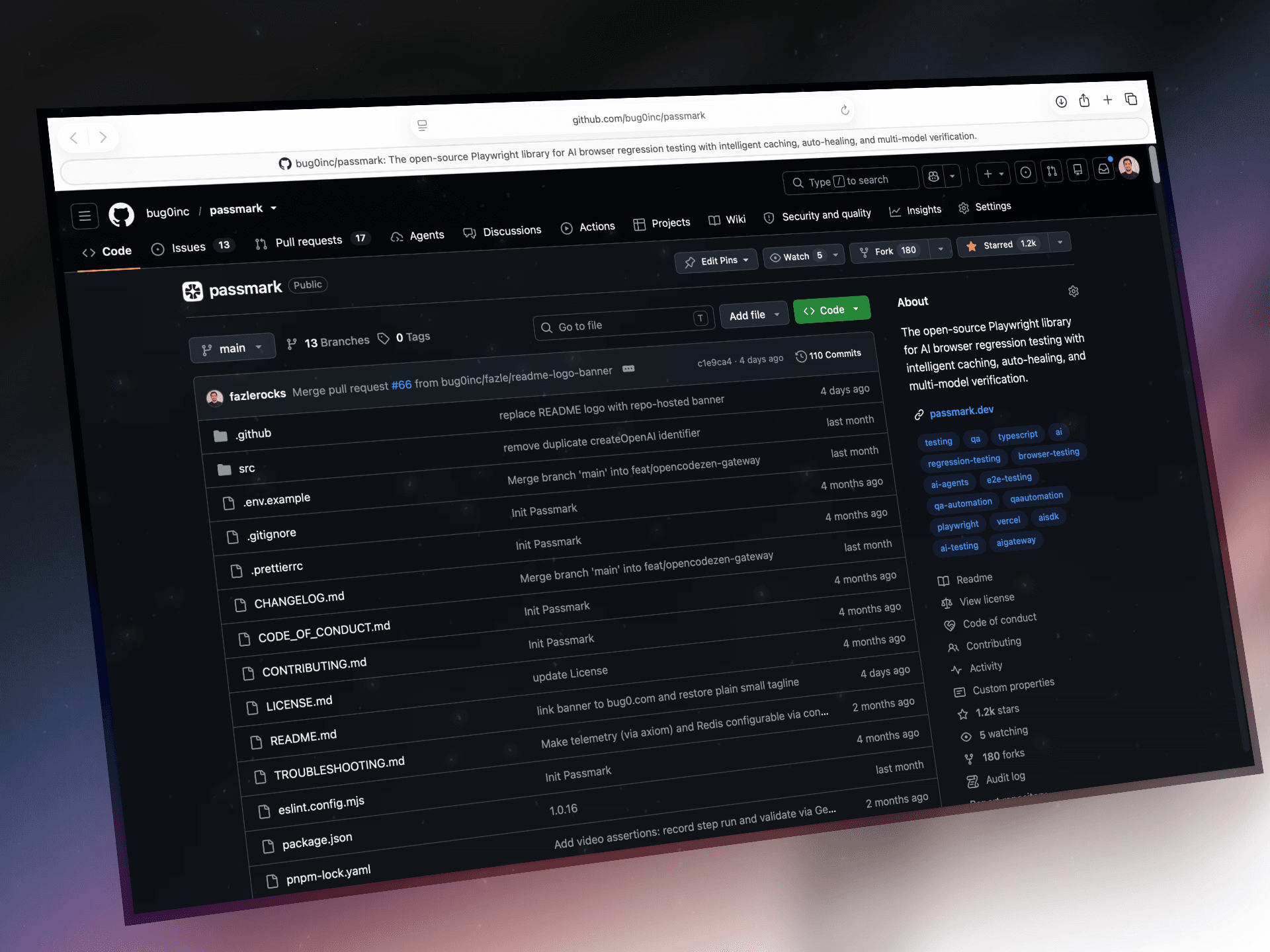
That gap is where Bug0 works, and it is worth being precise about scope: Bug0 is not a Postman alternative and not an API client. It is end-to-end coverage for the layer above the API. A forward-deployed engineer authors your critical user flows on Passmark, our AI testing engine, the engine runs and self-heals them on every deploy, and the engineer verifies each result. That is agentic testing applied to the browser, AI that drives the real interface and confirms the outcome, not a client replaying a saved request. If your reason for leaving Postman is that request-by-request checking no longer tells you whether the product works, that is the layer you are actually missing.
Pick an API client from the list for the endpoint work. Add an end-to-end layer for the flow work. They are different jobs, and the mistake is expecting one tool to do both.
FAQs
What is the best free alternative to Postman?
Bruno and Hoppscotch are the strongest free, open-source options. Bruno suits teams that want API definitions in git as plain files. Hoppscotch suits anyone who wants the lightest possible request-and-inspect tool, in the browser or self-hosted.
What is the best open-source Postman alternative?
Bruno for a git-native, offline desktop workflow, and Hoppscotch for a lightweight web-based one. Both are fully open source with no mandatory account. Insomnia's core is open source too and is the closest match to Postman's feature set.
Is Bruno better than Postman?
For developers who want offline, account-free, git-friendly API testing, yes. Bruno is lighter and keeps your collections as plain files in your repo. Postman still leads on breadth of platform features like mocks, monitors, and large shared workspaces, if you actually use those.
Is Bug0 a Postman alternative?
No. Bug0 is not an API client and does not replace Postman. It handles end-to-end testing of full user flows in a real browser, which is the layer above the API. Teams often pair an API client for endpoint checks with a service like Bug0 for flow coverage.
Can I move my Postman collections to another tool?
It depends on the tool. Bruno and Insomnia can import Postman collections, though complex scripts and environment logic may need manual cleanup. Simpler collections migrate cleanly; heavily scripted ones take more work.
Do I still need end-to-end testing if I have an API client?
Usually yes. An API client confirms endpoints respond correctly. It cannot confirm a user can complete a task in the interface, where many real bugs live. If confirming whole flows matters, you need an end-to-end layer in addition to, not instead of, an API client.